


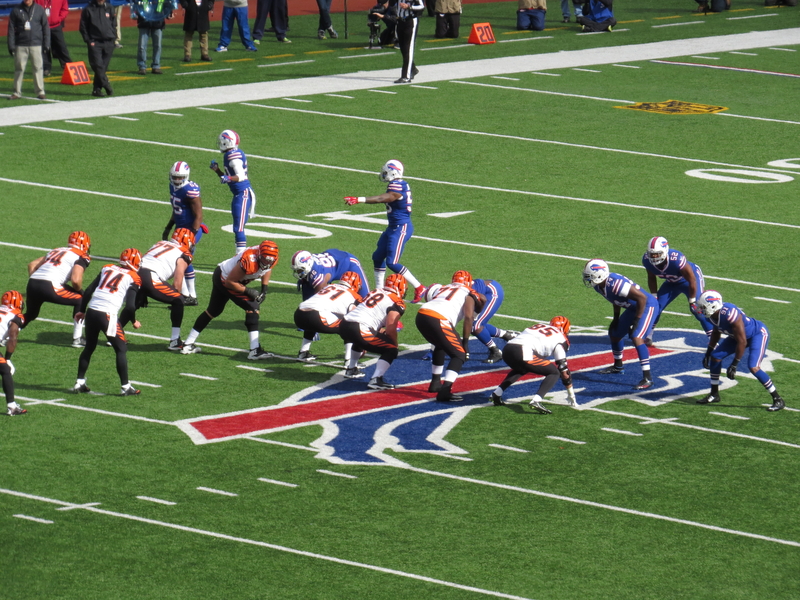
In American football, offside is a pre-snap penalty that occurs when any part of a defensive player’s body is in or beyond the neutral zone at the exact moment the ball is snapped. Mastering the rules around your position in American gridiron football is essential for players, coaches, and fans who want to understand the game’s deeper strategy.
When the center hikes the ball to start the play, every defensive player must be on their side of the line of scrimmage. If a defender’s helmet, hand, or foot is across that invisible line when the ball moves, a flag is thrown.
This rule exists for two fundamental reasons:
- Fairness: Defenders cannot gain an unfair advantage by lining up too close to the quarterback or in the offensive backfield.
- Safety: Maintaining a buffer zone reduces the risk of dangerous, unexpected collisions before the play begins.
Key takeaway: Offside is all about timing and alignment at the snap. If a defender crosses early but returns before the snap without causing contact or a reaction, no penalty is called.
The Neutral Zone & Line of Scrimmage Explained
To fully understand what is offside in football, you must first understand two critical concepts:
| Term | Definition |
|---|---|
| Line of Scrimmage | An invisible line that runs across the field parallel to the goal line. It marks where the ball is spotted before each play. |
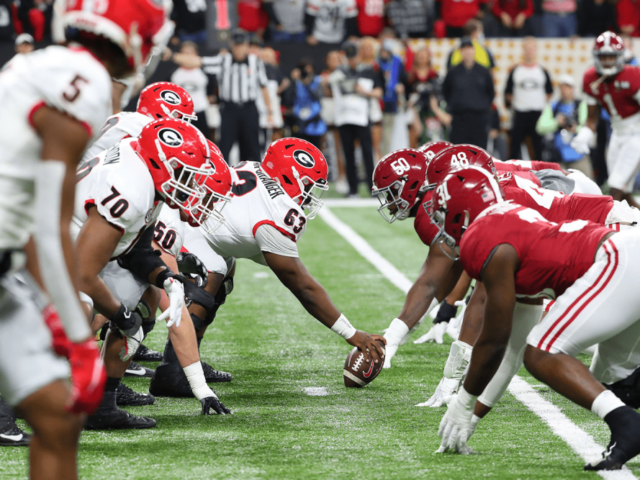
| Neutral Zone | The empty space between the offensive and defensive lines. It is the length of the football (about 11 inches) and belongs to neither team. |
The Golden Rule: Only the center is allowed to have any part of their body inside the neutral zone at the snap. Every other player—offense and defense—must be completely on their side of the neutral zone when the ball is hiked.
A player’s position in American gridiron football dictates exactly where they can align relative to this neutral zone. Defensive linemen and linebackers must stay behind the line of scrimmage, while wide receivers and tight ends must ensure they are not lined up beyond it.
Offside Penalty: Yards, Down & Result
When a team is flagged for offside in football, the penalty is straightforward:
| Penalty | Yardage | Down |
|---|---|---|
| Offside | 5 yards | Repeat the down |
Real-World Examples
- 1st and 10: Offside on defense → 1st and 5
- 3rd and 4: Offside on defense → 1st and 10 (because 5 yards exceeds the 4 needed for a first down)
- 3rd and 8: Offside on defense → 3rd and 3 (the down is repeated)
Important: Offside is not an automatic first down. It only results in a first down if the 5-yard penalty moves the ball past the line to gain.
What Is a “Free Play”? (And Why QBs Love It)
One of the most exciting moments in an NFL game is when a quarterback notices a yellow flag on the field and immediately throws a deep pass. This is called a free play, and it occurs because of the offside rule in football.
Here’s how it works:
- A defender jumps offside, but the ball is snapped before the referee blows the whistle.
- Because offside is a live-ball penalty, the play continues.
- The offense now has a no-risk opportunity:
- If the play gains many yards or scores a touchdown, the offense declines the penalty and keeps the result.
- If the play fails (incomplete pass, sack, or even interception), the offense accepts the 5-yard penalty and repeats the down.
Elite quarterbacks like Patrick Mahomes, Josh Allen, and Joe Burrow are masters at recognizing offside in football flags and immediately looking deep for a free big play.
Offside vs. False Start vs. Encroachment vs. Neutral Zone Infraction
Pre-snap penalties confuse many fans. Here is a clear breakdown of the four most common infractions, with a focus on how offside in football differs from the others:
| Penalty | Who Commits It | When It Happens | Result | Play Status |
|---|---|---|---|---|
| Offside | Defense | At the snap (player is in neutral zone) | 5 yards, repeat down | Live (play continues) |
| False Start | Offense | Before the snap (illegal movement) | 5 yards, repeat down | Dead (whistle blows immediately) |
| Neutral Zone Infraction | Defense | Defender enters neutral zone and causes an offensive player to move | 5 yards, repeat down | Dead (whistle blows immediately) |
| Encroachment | Defense | Defender makes contact with an offensive player before the snap | 5 yards, repeat down | Dead (whistle blows immediately) |
Why the Distinction Matters
- Offside in football is the only pre-snap defensive penalty that allows the play to continue. This creates the coveted free play opportunity.
- False start is always a dead-ball foul. The play never officially begins.
- Neutral zone infraction protects the offense: if a defender jumps early and causes a lineman to flinch, the defense is penalized, not the offense.
Can the Offense Be Called for Offside?
Yes, though it is rare. Offside in football is not exclusive to the defense.
Offensive offside occurs when an offensive player is lined up beyond the neutral zone at the moment of the snap.
Common scenarios:
- A wide receiver lines up with his helmet or foot across the line of scrimmage.
- An offensive lineman has his hand or body in the neutral zone at the snap.
Unlike a false start (which is a dead-ball foul), offensive offside is a live-ball foul. The play continues, and the penalty is enforced afterward: 5 yards from the previous spot, repeat the down.
This distinction is crucial for understanding every position in American gridiron football, as alignment discipline varies by role.
Special Situations: Field Goals, Punts & Goal Line
Field Goal Attempts
Offside in football on a field goal creates a win-win for the offense:
- If the kick is good, the offense declines the penalty and takes the 3 points.
- If the kick is missed, the offense accepts the 5-yard penalty and attempts a shorter kick.
If the 5 yards result in a first down, the coach may choose to keep the offense on the field and go for a touchdown instead.
Punts
Offside on a punt can be a drive killer for the defense:
- On 4th and 4, a defensive offside gives the offense 5 yards and an automatic first down.
- The punter leaves the field, and the offense continues its drive.
Goal Line and The “Half the Distance” Rule
When the offense is inside the opponent’s 10-yard line, a standard 5-yard penalty would often place the ball at the 1-yard line or even in the end zone. To prevent such scenarios, the NFL enforces the Half the Distance rule.
| Original Spot | Penalty | New Spot |
|---|---|---|
| 8-yard line | Offside | 4-yard line |
| 4-yard line | Offside | 2-yard line |
| 2-yard line | Offside | 1-yard line |
The ball is moved half the distance to the goal line rather than the full 5 yards.
Why Do Defenders Jump Offside?
Even professional, highly disciplined players commit offside in football penalties. Here’s why:
1. The Hard Count
Quarterbacks use a loud, exaggerated cadence to trick defenders into thinking the snap is coming. When a defender bites on a loud count, they often jump early.
2. The Silent Count
In loud stadiums (like Arrowhead or Seattle), offenses use a silent count where the quarterback lifts his leg or the center looks back to signal the snap. Defenders watch the ball instead of listening, making timing more difficult and often leading to mistimed jumps.
3. Aggressive Play
Pass rushers are coached to have an explosive first step. Elite defenders consistently push the limit of the offside in football rule. If they never receive an offside flag, they likely aren’t being aggressive enough.
Understanding these tactics is essential for anyone studying positions in American gridiron football, as each role requires different snap-discipline techniques.
Can a Team Commit Offside on Purpose? (The Palpably Unfair Act)
What if a defense repeatedly jumps offside to stop the clock or frustrate the offense?
The NFL has a specific rule to prevent such behavior: Rule 12.3.2 – The Palpably Unfair Act.
If a referee determines that a team is intentionally and repeatedly committing fouls to manipulate the game, they have the authority to award an automatic touchdown to the offense.
While this rule exists, it is almost never invoked for offside in football violations. It serves as a deterrent against blatant cheating.
How Referees Signal Offside
When a referee sees an offside violation in football, they follow this process:
- Throw the yellow flag at the spot of the infraction.
- Allow the play to continue (offside is a live-ball foul).
- After the play ends, the referee places one hand on their hip and then raises both arms above their head with wrists crossed.
- Announcement: “Offside on the defense, Number 97. Five-yard penalty. Repeat the down.”
Offside in Soccer vs. Offside in American Football
Many fans confuse the offside rule between the two sports. While they share a name, they are entirely different.
| Aspect | American Football Offside | Soccer Offside |
|---|---|---|
| What It Is | A pre-snap alignment/timing violation | A live-ball positioning violation |
| When It’s Called | At the snap | When the ball is played forward |
| Who Commits It | Usually defense | Usually offense (attacking players) |
| The Rule | Player is in neutral zone at snap | Attacker is closer to goal than both the ball and second-last defender when the ball is played |
| Exceptions | None | No offside on goal kicks, corner kicks, or throw-ins |
Bottom line: American football offside is about where you are when the ball is snapped. Soccer offside is about where you are when the ball is passed.
Frequently Asked Questions (FAQ)
Is offside an automatic first down?
No. Offside in football is a 5-yard penalty. It results in a first down only if the 5 yards move the ball past the line to gain.
What’s the difference between offside and neutral zone infraction?
Offside occurs at the snap; the play continues. Neutral zone infraction occurs when a defender crosses early and causes an offensive player to move; the play is blown dead immediately.
Can a defender jump offside and get back?
If a defender enters the neutral zone but returns to their side before the snap and does not cause an offensive player to move, there is no penalty. This is called “resetting.”
What is “unabated to the quarterback”?
If a defender has a clear, unimpeded path to the quarterback because they jumped early, the referee will blow the whistle immediately to protect the quarterback. This is treated as a neutral zone infraction, not a standard offside in football call.
Can you be offside on a kickoff?
Yes. On a kickoff, the kicking team must stay behind the ball until it is kicked. If a player crosses the line before the ball is struck, it is offside, and the kick is retaken 5 yards back.
How many offside penalties occur in an average NFL game?
The average NFL game sees 2 to 5 offside penalties combined between both teams, though the number varies based on team discipline and game situation.
Final Thoughts
The offside rule in football exemplifies the sport’s precision. A single helmet or hand positioned just an inch too far forward can grant the offense a first down, a free play, or even a touchdown.
For fans, understanding offside—and the critical difference between a live-ball free play and a dead-ball whistle—makes watching the game far more rewarding. For players and coaches, discipline along the line of scrimmage often separates championship contenders from teams that beat themselves.
Mastering your position in American gridiron football requires knowing exactly where you can and cannot align before the snap. Now that you understand the rule, the next time you see a flag fly before the snap, you’ll know exactly what happened—and whether the offense is about to take a deep shot downfield with nothing to lose.
